
Boiler repair and replacement in Hackney
We repair and replace gas boilers for homes and rental properties in Hackney, Islington and Shoreditch.
No heating, no hot water, a leak or a boiler that keeps locking out: we find the cause, tell you the price and put it right.
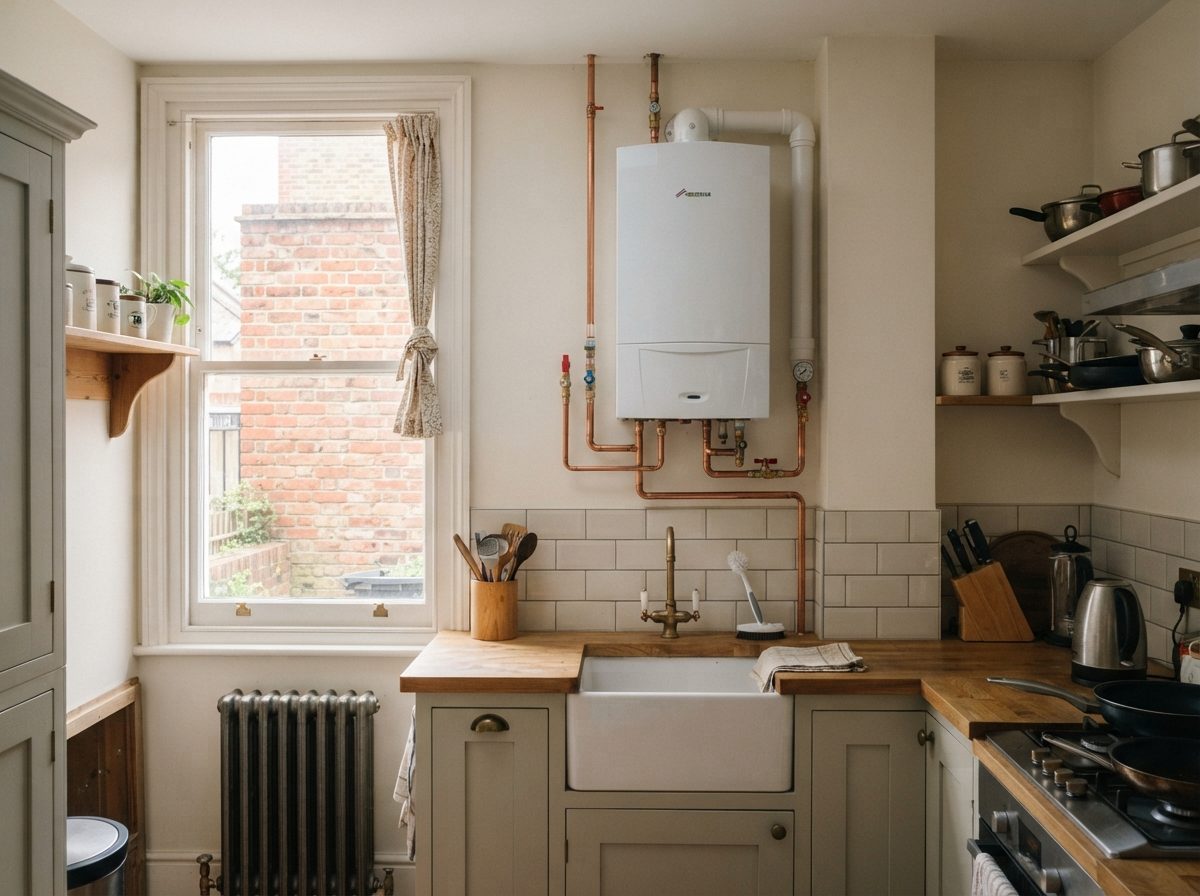
About boiler repair and replacement
Boilers tend to fail in a few familiar ways. They stop firing, lose pressure, drip water, make new noises, or heat the radiators but leave the taps cold. Each symptom points towards a different part, so the first job on any repair visit is to find the real cause. Swapping parts until something works is slow and expensive, and it can leave the original fault in place. It also helps to know whether the problem started suddenly or has been building, because a part that has failed outright behaves differently from one that is slowly wearing.
Fault finding starts with what you tell us and what the boiler shows: a fault code, a pattern of lockouts, or a noise that only happens when you run a hot tap. From there we test the components in turn. Common culprits include the pump, the diverter valve that switches between heating and hot water, the fan, the ignition and flame sensing electrodes, temperature sensors, the pressure relief valve, the expansion vessel and the printed circuit board that runs the boiler.
Once we know the cause, we explain it in plain English and give you the price before any work starts. Some repairs can be finished on the first visit; others need a part to be ordered, in which case we agree a time to come back. After any repair the boiler is tested on heating and hot water, and the combustion is checked with an analyser if the gas side has been disturbed.
Sometimes repair is not the sensible answer. If a boiler is old, parts are no longer made, or the same faults keep coming back, a replacement may cost less over the following years. We set out both options honestly. If a repair will keep your boiler going safely and reliably, that is what we will recommend. As a rough guide, we weigh up the boiler's age and condition, whether its parts are still made, how efficient it is compared with a modern condensing boiler, and what the repair would cost against a new one.
When a replacement does make sense, we fit the new boiler, clean the system so it starts on clean water, add inhibitor and a filter where appropriate, fit the controls the regulations require, commission it, and the work is notified under the Building Regulations. You receive the commissioning record and a compliance certificate afterwards.
Signs your boiler needs a repair
Some faults announce themselves: the boiler shows a fault code, refuses to fire, or the radiators stay cold. Others creep up. A boiler that needs resetting once a week, hot water that runs warm then cold, or radiators that take longer to heat are all early signs that a part is wearing out. Getting these looked at sooner usually means a simpler repair.
Water is a common clue. A drip from under the boiler, a damp patch on the ceiling below a loft boiler, or a pipe outside the wall that drips steadily all mean water is escaping. That outside copper pipe is usually the pressure relief valve discharge, and if it runs regularly the valve or the expansion vessel needs attention. In freezing weather, a condensing boiler that gurgles and locks out may simply have a frozen condensate pipe.
Noise tells us a lot too. Kettling, a rumbling sound as the boiler heats, suggests scale or sludge in the heat exchanger. A whining or grinding sound often comes from the pump or fan bearings. Repeated clicking without the burner lighting points to the ignition. None of these are a reason to panic, but they are a reason to book.
Stop using the boiler and have it checked if you see scorch marks on the casing, smell burning or fumes, notice soot, or your carbon monoxide alarm sounds. If you smell gas, turn off the supply at the meter and call the National Gas Emergency Service on 0800 111 999 before anything else.
What is included
Whether it is a single part or a new boiler, the work covers:
- We find the fault by testing the boiler, its controls and the wiring around it, rather than guessing at parts.
- We explain the fault clearly and give you the price to fix it before any work starts.
- We replace failed parts such as pumps, diverter valves, fans, sensors and electrodes.
- We repair leaks on the boiler and on the pipework immediately around it.
- We test the boiler on heating and hot water after the repair, and check combustion where the gas side has been disturbed.
- We give honest advice on whether repair or replacement makes more sense for your boiler.
- We fit full boiler replacements and commission them, and the installation is notified under the Building Regulations.
What to plan before you book
Note what the boiler is doing
Write down any fault code on the display, any noises, and when the problem started. Note whether it affects heating, hot water or both, and whether it happens all the time or only now and then. A photo of the display, added to your enquiry, is often the quickest way to share this, and it can point straight to the failed part.
Think about the boiler's age
If your boiler is well into its second decade, ask about repair versus replacement on the first visit. Knowing what a repair costs now, and which other parts are likely to wear next, lets you decide with the full picture rather than paying for a fix and replacing the boiler a few months later anyway.
Plan for a replacement
A new boiler can mean moving the flue, upgrading the gas pipe, changing the condensate route or adding controls such as a programmable room thermostat. We explain what your home needs and why before you commit, so there are no surprises once work begins and the old boiler has come off the wall.
Good to know
Frozen condensate pipes
In a cold snap, condensing boilers often stop because the plastic condensate pipe outside has frozen. Pouring warm, not boiling, water along the pipe until it thaws, then resetting the boiler, often clears it. If the pipe freezes every winter, rerouting or insulating it is a lasting fix worth discussing on the next visit.
Low pressure is a clue
A boiler that keeps losing pressure has water escaping somewhere, whether through a weeping joint, a radiator valve or the pressure relief valve. Topping up through the filling loop treats the symptom, not the cause, and constantly adding fresh water brings in oxygen that speeds up corrosion inside the system.
New boilers must be notified
A new gas boiler has to be notified under the Building Regulations. The engineer who fits it arranges this, and you receive a compliance certificate afterwards. Keep it safe with the commissioning record, because buyers' solicitors often ask for both when you come to sell the property.
How it works
- 1
Describe the fault
Tell us what is happening, any fault code on the display, and the boiler's make and model. Send us a message through the enquiry form, and add photos if you can.
- 2
We come out
We agree a visit, then test the boiler, the controls and the wiring step by step until we have found the real cause of the fault, however intermittent it is.
- 3
You get the price
We explain the fault and the cost of fixing it, or of replacing the boiler if that makes more sense, before any work starts. The decision is always yours.
- 4
Fixed and tested
We carry out the repair or replacement, test the boiler on heating and hot water, and talk you through what was done and what to watch for.
Boiler repair in Hackney, Islington and Shoreditch
Hackney's Victorian terraces and conversions often have boilers squeezed into kitchen cupboards or lofts, and many estate flats have combi boilers working hard in small spaces. Repairs there usually come down to the familiar wear on pumps, diverter valves and fans, with access and the flue route shaping how the job is done. In Islington, older Georgian and Victorian houses can have long pipe runs and several generations of pipework, so tracing a pressure loss can take patience.
In Shoreditch, the call might be to a warehouse conversion with a boiler at the end of a long flue, a new-build flat whose combi has started to lock out, or a cafe or office where no hot water stops the working day. When repair and replacement are close, building rules, conservation area considerations and access all feed into the advice we give.
Questions customers ask
Is it worth repairing an old boiler?
Often it is. If the boiler is safe, parts are available and the fault is a one-off, a repair is usually the cheaper choice. We tell you honestly when it is not, for example when several parts are failing at once or parts are no longer made.
Do you carry parts?
We bring what we can based on what you tell us. Sending the make, model and fault code beforehand gives the best chance of a fix on the first visit. If a part has to be ordered, we agree a return visit with you.
How is the price worked out?
It depends on the fault, the part needed and how long the repair takes. We give you the price before we start, so you can decide with the numbers in front of you. Tell us the make, model and any fault code in your enquiry.
Why does my boiler keep losing pressure?
Usually a leak somewhere on the system, a pressure relief valve letting by, or an expansion vessel that has lost its air charge. It needs finding, because topping up only hides the problem and brings fresh oxygen into the system.
Do you replace boilers?
Yes. Full boiler replacements are part of what we do. The new boiler is commissioned, the system is cleaned and treated, and the installation is notified under the Building Regulations, with the paperwork left for you to keep.
Can you repair a boiler in a rented flat?
Yes. We work for landlords, letting agents and tenants, and can talk to whoever is paying for the repair. Tenants should let their landlord know first, as repairing the boiler is usually the landlord's responsibility under the tenancy.
My boiler shows a fault code. What does it mean?
Fault codes differ between makes, and one code can have several causes. The manual gives a rough meaning, but the code is a starting point for testing rather than an answer. Tell us the code, make and model in your enquiry and we can say more.
Get your boiler fixed
Send us a message through the enquiry form, tell us what the boiler is doing and add a photo of any fault code. We will tell you what happens next.