Central heating, radiators and power flushing in Hackney
AC Gas & Boiler Specialists helps homes and businesses with central heating repairs, cleaning and upgrades, covering Hackney, Islington and Shoreditch.
Cold radiators, noisy pipes, awkward controls or a system clogged with sludge: tell us what is happening and we will explain the options and the price before any work starts.
About central heating, radiators and power flushing
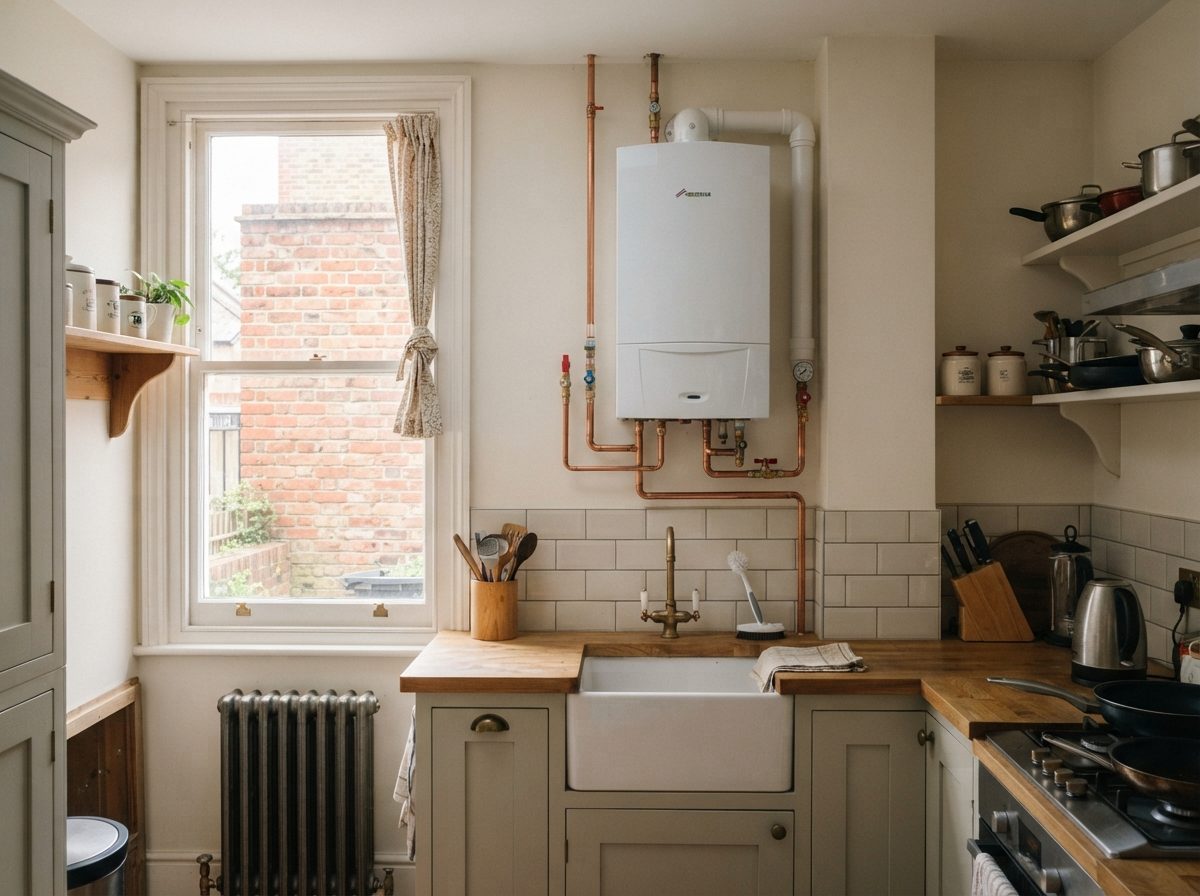
A wet central heating system is a loop. The boiler heats water, a pump pushes it through pipes to the radiators, and valves and controls decide where it goes and when. The boiler gets most of the attention, but a large share of heating complaints come from everything else in that loop: a pump that has weakened, a valve that has stuck, radiators full of sludge or air, or controls that are wired or set up badly.
Our heating work covers central heating repairs and troubleshooting, radiator installation and upgrades, smart thermostat fitting and setup, and power flushing to restore heating efficiency. That might mean replacing a single thermostatic radiator valve, adding a radiator to a cold extension, swapping an old dial thermostat for a smart one, or cleaning out a whole system that has been neglected for years.
It suits homeowners who are tired of a house that never quite gets warm, landlords who want fewer heating complaints from tenants, and small businesses that want better control over when and where they heat. It also suits anyone who has just had a new boiler fitted into an old system and wants the rest of the system to keep up, and anyone renovating who wants radiators in the right places before the floors and walls are finished. Planning heating early is far easier than reworking it once a room is decorated.
On a visit, we start by running the heating and feeling how each radiator warms. Cold at the bottom points one way, cold at the top another, and a single radiator that never comes on points somewhere else again. We check the system pressure, the pump, the diverter or zone valves and the controls, and looks at the condition of the water when a radiator is bled. Dark, dirty water tells its own story, and a magnet held to a radiator or pipe can show how much debris has gathered.
From there we recommend the smallest fix that solves the problem. A power flush is a good tool, but it is not the answer to every cold room, and we will say so when a valve, a rebalance or a bleed is all that is needed. You get the reasoning and the price before anything starts, in plain English.
Common heating problems and when to get in touch
Radiators that are warm at the top and cold along the bottom are the classic sign of sludge. Over the years, steel radiators and pipework corrode on the inside, and the black magnetite that forms settles where the water moves slowest. As it builds up, it narrows pipes, clogs valves and makes the pump and boiler work harder for less heat.
Radiators that are cold at the top and warm below usually have air trapped in them, which bleeding will often cure. If you find yourself bleeding the same radiator every few weeks, though, something is letting air in or producing gas inside the system, and that is worth investigating. A pressure gauge that keeps dropping, so you have to top up the boiler regularly, points to a leak or a failing pressure vessel.
Some problems are about distribution rather than dirt. Rooms near the boiler roasting while the far bedroom stays cold usually means the system is out of balance. Banging, gurgling or a constant whooshing can mean air, a struggling pump or water rushing through some radiators. Heating that comes on at odd times, or not at all, is often down to a programmer, room thermostat or wiring fault rather than the boiler.
If your bills have crept up, the boiler cycles on and off, or the heating takes far longer to warm the house than it used to, it is a good time to get in touch. Tackled early, most of these problems are cheaper to fix than the pump or boiler failure they can lead to.
What is included
Our heating services include:
- Central heating repairs and fault finding on pumps, valves, controls and pipework.
- Radiator installation, including new radiators, upgrades to larger ones and moving existing radiators.
- Fitting and balancing thermostatic radiator valves so each room heats evenly.
- Smart thermostat fitting and setup, with a walk-through of how to use it.
- Power flushing to clear sludge and debris from the whole system.
- Refilling and treating the system with inhibitor after any drain-down or flush.
- Replacement of failed pumps, zone valves and diverter valves where they are the cause.
What to plan before you book
Walk round the radiators
With the heating on, go round each radiator and note which are cold at the bottom, cold at the top, slow to warm or not warming at all. A rough list is enough. It helps us tell whether we are looking at sludge, air, a stuck valve or a system that needs balancing.
Choose your controls
If you are thinking about a smart thermostat, decide whether you want one room thermostat or room-by-room control, and check your Wi-Fi reaches the spot where it will go. Note your boiler's make and model too, as that affects which thermostats will work with it.
Measure for new radiators
For a new or replacement radiator, measure the wall space, note where the existing pipes come up through the floor, and say roughly how big the room is. We can work out the heat output the room needs and suggest a radiator that fits without a lot of extra pipework.
Set aside a day for a power flush
A power flush runs for several hours, and the heating and hot water from the boiler are out of use while it happens. Choose a day when that is manageable, clear access to every radiator, and move anything delicate away from the boiler and the radiator valves.
Good to know
Sludge is the usual suspect
Radiators that are cold at the bottom often point to sludge. Left alone it can block narrow pipes, jam valves and wear out the pump. It also shortens the life of a new boiler, which is why many manufacturers' terms expect the system to be cleaned when one is fitted.
Try bleeding before you call
A radiator that is cold at the top usually has air in it. With the heating off, open the bleed valve with a radiator key until water appears, then check the boiler pressure and top it up if needed. If the air keeps coming back, let us know.
Inhibitor protects the system
Inhibitor is a chemical added to the heating water to slow down internal corrosion. It gets diluted every time the system is drained or topped up a lot, so after a flush, a radiator change or a leak repair we add fresh inhibitor to keep the system clean.
Better controls save energy
A room thermostat, a programmer you actually understand and thermostatic radiator valves let you heat the rooms you use, when you use them. A smart thermostat adds control from an app, which helps if your hours vary. Good controls often cut bills more than people expect.
How it works
- 1
Tell us what is wrong
Describe the problem, or what you would like to change, using the enquiry form. Mention the make of your boiler and controls and which radiators are giving trouble.
- 2
We take a look
We visit, run the system and test each part to find the cause, or measures up the rooms and walls for new radiators and controls.
- 3
You get a price
We explain what is needed, why it will help and what it costs, and agree a day for the work that suits you before anything starts.
- 4
Work done and balanced
We carry out the work, refill and treat the system, balance the radiators so each room warms evenly, and show you how to use any new controls.
Central heating in Hackney, Islington and Shoreditch
Hackney's Victorian terraces and its post-war estates both tend to have heating systems that have been altered many times, with old radiators on new boilers and pipework run under floorboards decades ago. Sludge and poor balancing are common in those homes, and a careful flush or rebalance can transform them. Islington has many tall Georgian and Victorian houses and conversions where top-floor rooms struggle, and in conservation areas new radiators and controls often need to sit quietly in period rooms.
In Shoreditch, warehouse conversions with high ceilings and big windows need more heat than their floor area suggests, while newer flats and offices often have compact systems with zoned controls. Across all three areas, we look at how the building is built and used before recommending new radiators, controls or a flush.
Questions customers ask
How is the price for heating work worked out?
It depends on what the job involves: the number of radiators, whether parts are needed and how long the work takes. After a look at the system we give you a clear price, and nothing starts until you have agreed it.
What is a power flush?
A power flush connects a pump to the heating system and pushes water and cleaning chemicals through it at a strong flow, radiator by radiator, to shift sludge and debris. The system is then refilled with clean water and inhibitor.
Do I need a power flush?
Not always. Cold spots along the bottom of radiators, black water when you bleed them, and a noisy boiler or pump are signs a flush may help. If a single valve or a rebalance would do the job, we will tell you.
Can you fit a smart thermostat to my boiler?
Most modern boilers can work with one, though some need a particular model or an extra receiver. Tell us your boiler's make and model and the thermostat you have in mind, and we will check that they are compatible before we book.
Can you move or add a radiator?
Yes. Radiators can be moved to a better wall, added to a cold room or swapped for a larger one. We look at where the pipework runs and explain how much disruption is involved, including any lifting of floorboards.
Why are some rooms colder than others?
Usually the system is out of balance, so water takes the easiest route and the furthest radiators miss out. A stuck valve, sludge or trapped air can also be to blame. Balancing the system is often the cheapest fix.
Why does my boiler pressure keep dropping?
Pressure that falls over days or weeks usually means a small leak somewhere in the system, or a pressure relief valve or expansion vessel that needs attention. We trace where the water is going before topping it up.
Related services
Get your heating working properly
Tell us which rooms are cold or what you want to change, and we will tell you what it would take.