Warm air heating servicing and repair in Hackney
We service and repair domestic warm air heating units in flats and houses across Hackney, Islington and Shoreditch.
Warm air heating blows heated air through ducts and grilles instead of using radiators. It needs careful, regular checks to stay safe and keep your home warm.
About warm air heating
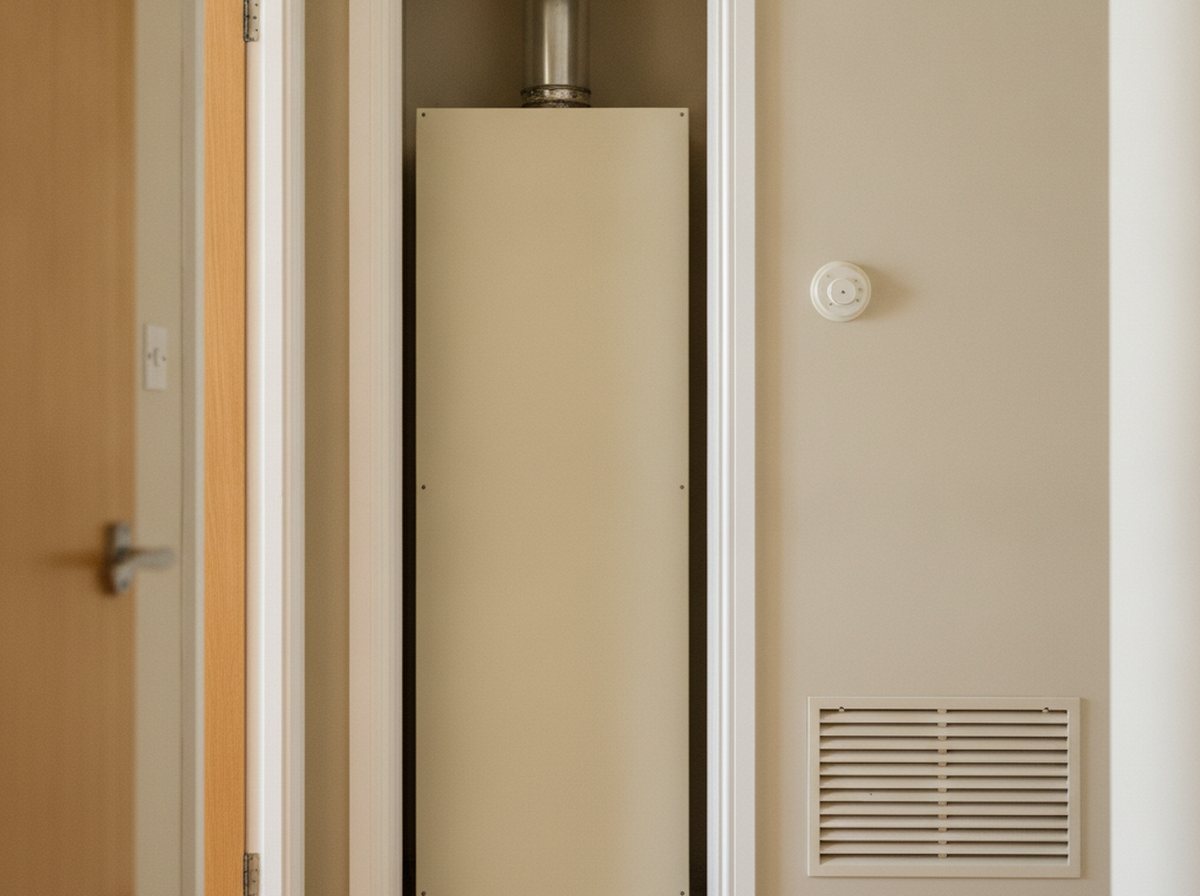
Gas-fired warm air heaters were fitted in many London flats and estates from the 1960s and 1970s onwards, and plenty are still running. Instead of heating water for radiators, the unit burns gas to heat a metal heat exchanger, and a fan blows room air across it and through ducts to grilles in each room. Air returns to the unit through a return grille or the gaps under doors, and the cycle repeats. Many units also have a gas circulator built in to heat a hot water cylinder.
That design has one important consequence. The air you breathe passes over the outside of the heat exchanger, while the products of combustion pass through the inside. If the heat exchanger cracks or corrodes, which can happen after decades of heating up and cooling down, those fumes can get into the air stream and be blown around your home. That is why a warm air unit needs a regular, thorough service from someone who understands how it works, rather than being left until it stops.
On a service we check the burner and how cleanly it is burning, inspect the heat exchanger as closely as the unit allows, and test the fan, its motor and the controls that start and stop it. We check the flue and carry out spillage tests with the circulating fan running and internal doors closed, because the fan can affect how an open-flued unit clears its fumes. The air filter is cleaned or replaced, and the ducting and return air path are checked.
Warm air heating suits people living with it now who want it kept safe, landlords whose tenants rely on it, and anyone weighing up whether to keep an older system. A well maintained unit can keep running for many years, and some people prefer the quick heat and the lack of radiators on the walls. A service before winter is especially worthwhile if the unit has stood unused for a while.
Parts for older units can take some finding, and some models are no longer made at all. We tell you straight away if a part is hard to get and talk through the options, from tracking down a compatible part to replacing the unit or changing the heating system altogether. Where a unit is no longer safe or practical to repair, we explain why in plain terms.
Signs your warm air unit needs attention
The clearest sign is a change in the air itself. Air from the grilles that feels cooler than it used to, takes longer to warm up, or smells dusty, burnt or stale suggests the burner, filter or heat exchanger needs looking at. A slight dusty smell the first time the heating comes on after summer is normal; a smell that lingers or keeps coming back is not.
Noise is the next clue. The fan in a warm air unit should run smoothly and fairly quietly. Squealing, rattling or a low rumble often points to worn motor bearings or a fan that has worked loose. A unit that keeps cutting out and restarting may be overheating and tripping its limit thermostat, often because the filter is clogged or the return air path is blocked.
Uneven heating is common as these systems age. Rooms where the grilles blow cold, weakly or not at all can be down to a closed damper, a crushed or disconnected duct, a blocked filter or a fan that is losing speed. In flats where ducting runs through ceiling voids, a duct that has come apart can leak warm air into the wrong place entirely.
Some signs mean the unit should be switched off and left off until it is checked: soot or staining around the unit or its grilles, a carbon monoxide alarm sounding, a smell of fumes in the cupboard, or people in the home feeling headachy or sick when the heating is on. Turn it off, open windows and call 0800 111 999 if you suspect carbon monoxide.
What is included
A warm air service or repair includes:
- We check the burner and measure how cleanly it is burning.
- We inspect the heat exchanger for cracks, corrosion or damage as far as the unit's design allows.
- We test the fan, its motor and the controls that start and stop it, including the overheat limit thermostat.
- We check the flue and ventilation, and carry out spillage tests with the circulating fan running.
- We clean or replace the air filter so the unit can breathe properly.
- We check the ducting, the grilles and the return air path back to the unit.
- We check the built-in water circulator where the unit has one.
- We find and repair faults on units that have stopped working, sourcing parts where they can still be found.
What to plan before you book
Find the unit and its details
Warm air units usually sit in a cupboard in the hall or near the middle of the flat. The make and model are normally on a data plate inside the cupboard door or on the casing. A photo of the plate, added to your enquiry, lets us check how the unit is serviced and which parts are still available.
Clear the cupboard
Cupboards around warm air units are often used for storage, but the unit needs that space for air and for safe access. Clearing it before the visit lets us work properly, and it is worth keeping it clear afterwards, as stored items can starve the burner and the fan of the air they both depend on.
Check the grilles
Walk round the home with the heating on and note any rooms where the grilles blow cold, weakly or not at all. Check whether any grilles have been closed, painted over or covered by furniture. It helps us find duct, damper or fan problems quickly rather than spending the visit searching for them.
Good to know
Keep the return air path clear
Warm air systems need air to flow back to the unit as well as out of it. Blocking door gaps, return grilles or the cupboard vent makes the fan work harder, cuts heat output and, on open-flued units, can pull fumes back down the flue. Take care with draught excluders on internal doors in homes that use warm air.
Change or clean the filter
A clogged filter cuts heat output, strains the fan and can make the unit overheat and cut out. Many filters can be cleaned or swapped by the householder between services, following the manual, without touching any part of the gas side. If you are unsure where yours is, ask on the visit and we will show you.
Fit a carbon monoxide alarm
Because the unit circulates air around your home, a carbon monoxide alarm near the unit and in bedrooms is a sensible precaution. In rented homes in England, an alarm is required in any room with a fixed combustion appliance other than a gas cooker, and a warm air unit counts. Test it monthly.
Shared flue systems
Some blocks from the 1960s and 1970s were built with shared flue ducts, often called Se-ducts or U-ducts, which take fumes from appliances on several floors. Units connected to them need particular care, and a change to one flat's appliance can affect others. We check the connection and tell you if anything needs raising with the building owner.
How it works
- 1
Tell us about the unit
Use the enquiry form to send the make and model from the data plate, what the unit is doing and whether it also heats your hot water. Photos of the plate and the cupboard help.
- 2
Agree a visit
We arrange a time that suits you and let you know if anything needs clearing from the cupboard, or moving away from the grilles, before we arrive.
- 3
Service or repair
We check the burner, heat exchanger, fan, controls, filter and flue, run spillage tests with the fan on, and find the fault if there is one.
- 4
Talk it through
We explain what we found in plain terms and give you the price of any repair before carrying it out, along with honest advice on the unit's future.
Warm air heating in Hackney, Islington and Shoreditch
Hackney's post-war council estates and low-rise blocks are where warm air heating turns up most, as many flats were built or refurbished with ducted systems in the 1960s and 1970s. Some still have their original ducting, and a few have units connected to shared flues serving the whole block. In Islington, warm air units appear in estate flats too, and occasionally in Victorian and Georgian conversions where a ducted system went in during an earlier refurbishment.
Shoreditch has fewer warm air systems, as warehouse conversions and new-build flats usually have combi boilers or other heating, but older blocks in and around the area still rely on them. Wherever the unit is, access through a managing agent or council, the condition of the ducting and the availability of parts all shape what we can recommend.
Questions customers ask
Do you work on older warm air heaters?
Yes. We service and repair warm air units, including older ducted systems that have been running for decades. If a part is no longer made, we tell you straight away and talk through the options before the visit goes any further.
How often should a warm air heater be serviced?
Once a year is the usual advice, as with any gas heating appliance, and manufacturers usually ask for a yearly service. Older units benefit most, because the heat exchanger needs regular checking for wear and corrosion as the years go by.
Why do some rooms get no warm air?
It can be a blocked or crushed duct, a closed damper, a failing fan or a filter that needs changing. Grilles that have been shut or covered are also common. We check each possibility in turn until we find the cause.
Is a cracked heat exchanger dangerous?
It can be, because combustion products can get into the warm air and be carried around your home. If we find one, the unit is turned off and labelled with your permission, and we explain the options for repair or replacement.
Can my warm air unit also heat water?
Many do, through a built-in gas circulator that heats a hot water cylinder. Tell us in your enquiry and we will check that part too, as the circulator needs its own checks alongside the air side of the unit.
How is the price worked out?
It depends on the unit and what it needs. Warm air units vary a lot in age and layout, so tell us the make and model in your enquiry, with a photo of the cupboard, and we can explain the cost before the visit.
Get your warm air heating checked
Send us a message through the enquiry form with the make and model of your unit, and we will arrange a visit.