
Boiler servicing in Hackney
We service gas boilers for homeowners, landlords and tenants across Hackney, Islington and Shoreditch, and we keep you informed from your first enquiry to the final check.
A yearly service keeps a boiler burning safely and finds worn parts before they leave you without heating or hot water.
About boiler servicing
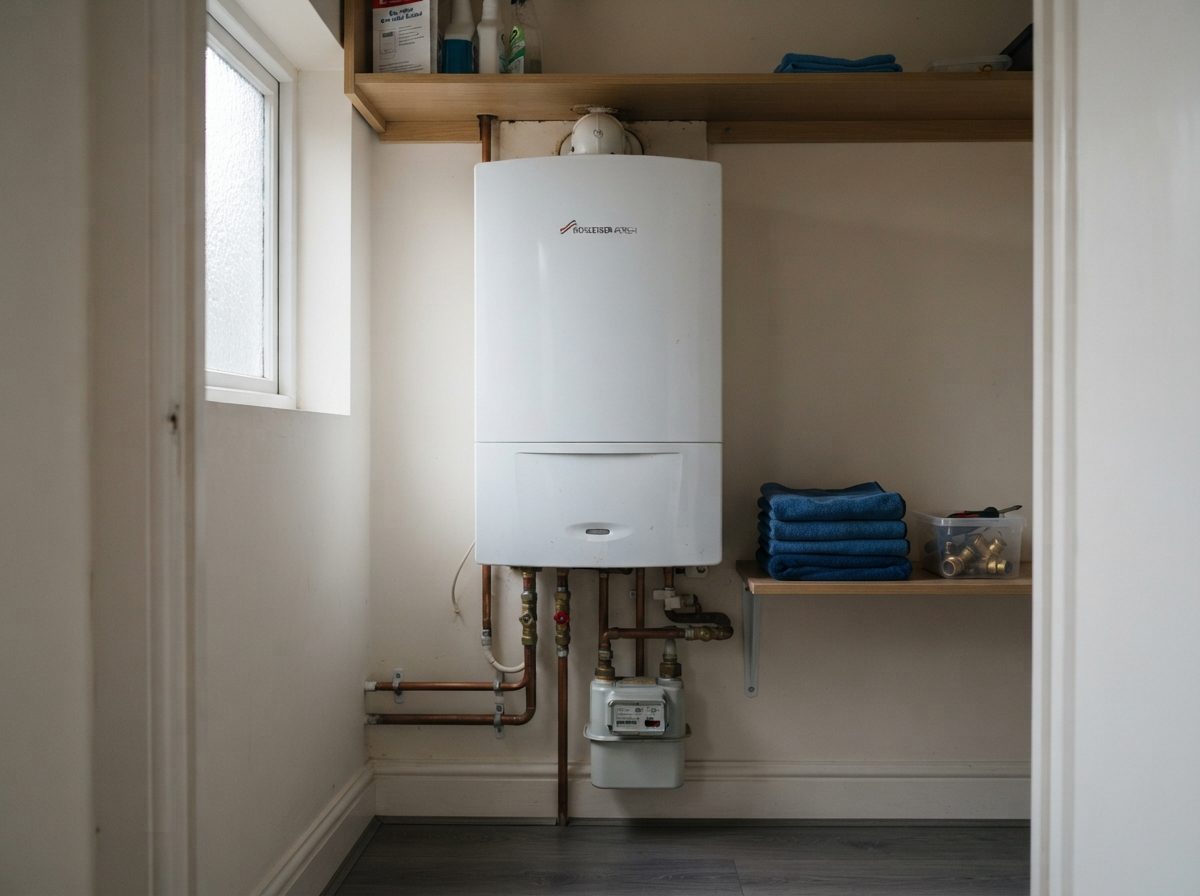
A boiler service is a planned, hands-on check of the whole appliance rather than a quick look at the front panel. We look at how the boiler burns its gas, how it gets rid of the fumes it makes, and whether the safety devices built into it still react the way they should. The aim is simple: a boiler that is safe to live with, runs efficiently and is less likely to let you down on the first cold morning of the year.
Most of the work happens with the casing off. We use a flue gas analyser to read the combustion, which shows whether the mix of gas and air is right and whether the boiler is producing more carbon monoxide than it should. We check the working gas pressure at the boiler and time the gas rate at the meter, then compare both with the manufacturer's figures. Where the manufacturer's instructions call for it, we open up the burner and heat exchanger to inspect and clean them.
Condensing boilers, which covers almost every boiler fitted in the last twenty years, also produce slightly acidic water that drains away through a trap and a plastic pipe. That trap can silt up, and when it does the boiler can lock out. Cleaning it is a small job that prevents a common winter breakdown. We also follow the flue from end to end, make sure the seals on the boiler are intact, and check the pressure in the heating system.
A service suits anyone with a gas boiler, but it matters most for older boilers, boilers that have started making new noises or losing pressure, and boilers in flats where the flue runs through other rooms or a ceiling void. Flues hidden in voids need inspection hatches so they can be checked along their length, and we will tell you if yours does not have them. Manufacturers usually ask for a yearly service, so keep the record from each visit with the boiler's paperwork.
A service is not a repair. If a check fails, we stop and tell you what the fault is, why it matters and what it would take to put right. Nothing more is done without your agreement. If we find something unsafe, we explain exactly what we have done to make it safe and why. That way you always know where you stand.
When a boiler needs more than its yearly visit
The easy answer is once a year, ideally before the heating goes on for winter. Some signs mean you should book sooner. A boiler that has begun to lock out and need resetting, takes longer to fire up, or makes a kettling or banging noise is telling you something has changed inside it. Kettling usually points to scale or sludge restricting the flow through the heat exchanger, and it tends to get worse rather than better.
Pressure is another clue. On most sealed systems the gauge should sit at around 1 to 1.5 bar when the system is cold. If it keeps dropping and you keep topping it up, water is escaping somewhere, often through the pressure relief valve to the copper pipe outside. If it climbs high whenever the heating runs, the expansion vessel may have lost its charge. Both are worth mentioning in your enquiry.
Some signs are about safety rather than performance. Soot or brown staining on or around the boiler, a smell of fumes, or a carbon monoxide alarm sounding all mean you should stop using the boiler. If an alarm goes off, turn the boiler off, open windows, get everyone outside and call the National Gas Emergency Service on 0800 111 999.
Finally, a service makes sense when something about the home changes: you have just moved in and have no record of the last visit, there has been building work near the flue, or you are about to let the property. In each case a fresh check gives you a known starting point.
What is included
Every boiler is a little different, but a typical service covers the following. If something fails a check, we explain it and agree any repair with you first.
- We look over the boiler, its casing, seals and the pipework around it for signs of leaks, corrosion or heat damage.
- We run a flue gas analysis to measure how cleanly the boiler is burning and how much carbon monoxide it produces.
- We check the working gas pressure and the gas rate and compare them with the manufacturer's figures.
- We inspect the flue and its terminal, inside and outside, including access points on flues that run through voids.
- We open up and clean the burner, heat exchanger and condensate trap where the manufacturer's instructions call for it.
- We test the safety devices, the controls and the pressure in the heating system.
- We leave you a written record of the service, the readings we took and anything we found.
What to plan before you book
Find the make and model
The make and model are usually printed on the front panel or on a label underneath the boiler, sometimes behind a small flap. Adding a photo of the label to your enquiry lets us look up the manufacturer's service steps in advance and think about which seals or gaskets might be needed once the casing comes off.
Clear the cupboard and the route
Boilers often live in cupboards packed with towels, mops and cleaning products. Clearing the space around the boiler, and the route to it, means work can start straight away and gives room to take the casing off safely. If the gas meter sits in a cupboard too, clear that as well, because we need to read it during the service.
Pick a time before winter
Booking a service in late summer or early autumn means any worn part is found while you can still manage without the heating for a day or two. Parts can take longer to arrive in the colder months, when demand for them is highest, so an early visit gives you room to plan a repair calmly.
Good to know
Ask to see the ID card
Anyone doing gas work in your home must be a registered gas engineer. You can ask to see the engineer's ID card, which carries a photo and a licence number, and turn it over to see which types of appliance they can work on. You can also check the number on the official register's website before the visit.
Fit a carbon monoxide alarm
A carbon monoxide alarm in the room with the boiler, and ideally in bedrooms, is a cheap and simple safeguard. Look for one marked BS EN 50291, test it monthly and replace it by its end-of-life date. In rented homes in England, an alarm is required in any room with a fixed combustion appliance other than a gas cooker.
Run it now and then in summer
Put the heating on for a few minutes once a month during summer. It keeps the pump and diverter valve moving, so they are less likely to stick when you first need the heating in autumn. Many modern boilers do a version of this by themselves, but a short run does no harm and shows up problems early.
How it works
- 1
Get in touch
Send us a message through the enquiry form. Tell us the make and model, roughly how old the boiler is and whether it has given you any trouble lately.
- 2
Agree a time
We arrange a visit at a time that suits you, and let you know if there is anything to clear, move or have ready beforehand.
- 3
The service
We work through the checks with the casing off, cleans what needs cleaning, then puts the boiler back together and tests it on heating and hot water.
- 4
What we found
We talk you through the readings, flag anything that needs attention now or soon, and leave you a written record to keep with the boiler's paperwork.
Boiler servicing in Hackney, Islington and Shoreditch
In Hackney a lot of our servicing is in Victorian terraces, many split into flats, and in homes on the borough's council and housing association estates. Converted terraces often have a boiler tucked into a kitchen cupboard or a loft, with a flue that travels some distance to reach an outside wall, so checking its whole length is a real part of the job. In Islington, Georgian and Victorian terraces and conversions are common, and many streets sit in conservation areas where any change to a flue on the front of a building needs thought.
Shoreditch brings a different mix: warehouse conversions with long flue runs through ceiling voids, new-build flats with compact combi boilers in utility cupboards, and small offices, cafes and restaurants that rely on a boiler for heating and hot water. Wherever the boiler is, the service follows the same careful steps, adjusted to suit the building.
Questions customers ask
How often should a boiler be serviced?
Once a year is the usual advice, and manufacturers usually ask for a yearly service under their terms. A boiler that is showing faults, losing pressure or locking out should be looked at sooner rather than left until its next service is due.
How is the price worked out?
The price depends on the boiler, its age, how easy it is to reach and what it needs. Tell us the make and model in your enquiry, with anything you have noticed, and we can explain the cost before the visit.
Do I need to be at home?
Someone needs to let us in and be there at the end so we can explain what we found and hand over the record. It does not have to be the owner: a tenant, family member or trusted neighbour is fine.
Will my heating be off for long?
The boiler is turned off and isolated while we work on it, then back on once it has been tested. Most of the visit is spent on checks and cleaning, and we give you a sensible idea of timing when we arrive.
What if you find a problem?
We explain the fault, what it would take to fix and what it would cost. Nothing is repaired without your agreement. If the problem makes the boiler unsafe, we explain why it has to stay off until it is put right.
Can you service a boiler in a rental property?
Yes. We service boilers for landlords and letting agents, and the annual gas safety check can be arranged for the same visit. Landlords need to keep each gas safety record for two years and give tenants a copy.
Book your boiler service
Send us a message through the enquiry form with the make and model, and we will find a time that suits you.