
Cooler servicing and repair in Hackney
AC Gas & Boiler Specialists helps shops, cafes and offices with cooler servicing and repairs, covering Hackney, Islington and Shoreditch.
A cooler that stops holding its temperature costs stock and trade. We find what is wrong and help keep your units running properly.
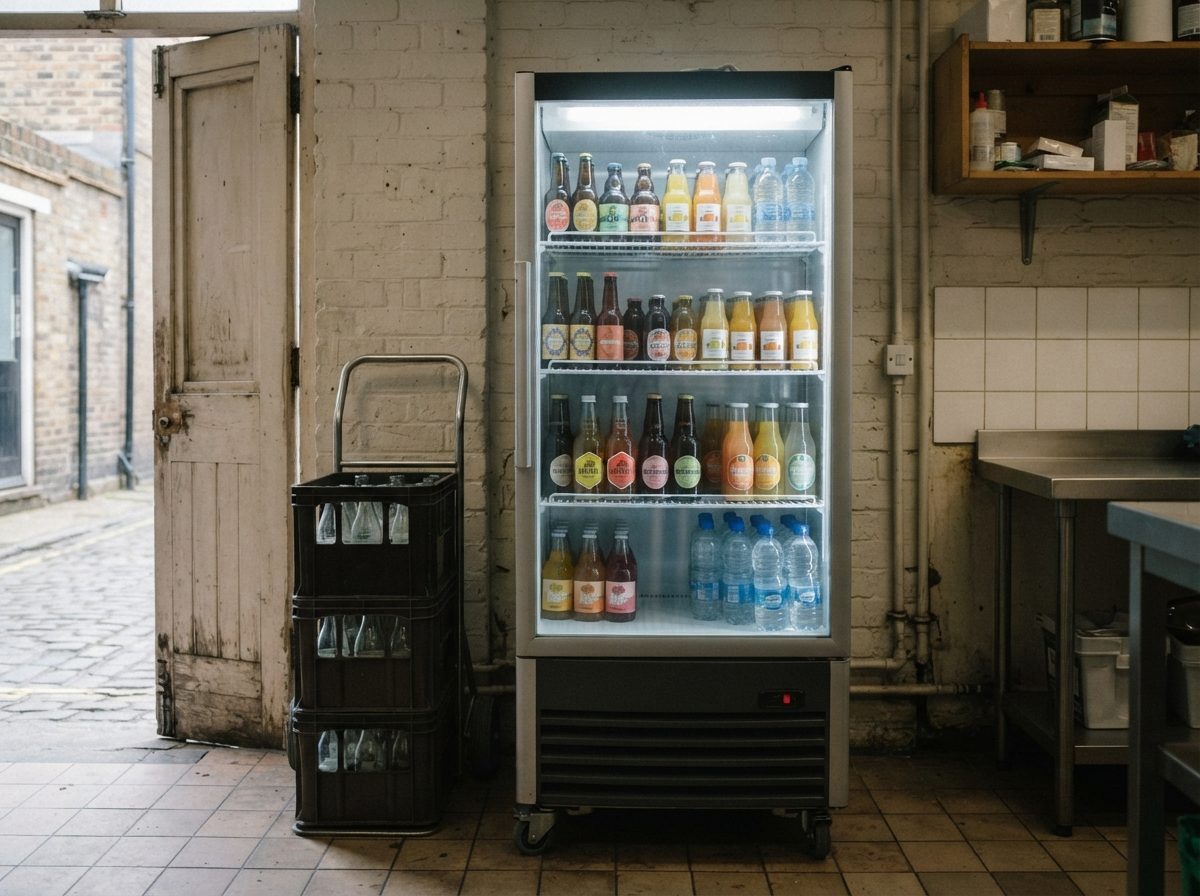
About coolers
Coolers in shops, cafes and offices have a hard life. Drinks coolers and display chillers are opened hundreds of times a day, under-counter units sit next to coffee machines and ovens, and back-room fridges are often squeezed into corners with no air around them. They run day and night, all year, and most of the time nobody thinks about them until the milk turns or the drinks come out warm.
Most cooler faults build up slowly rather than arriving out of nowhere. Dust and grease coat the condenser so it cannot shed heat, a fan motor starts to slow, a door seal flattens or tears, a hinge drops so the door no longer closes square, or a thermostat drifts away from its setting. Each one makes the unit work harder, and caught early, most are simple to put right.
Our cooler service covers the parts that keep a unit cooling well. We check the temperature it actually holds against what it is set to, test the controls and thermostat, clean the condenser and the area around it, check the fans and their motors, and look at door seals and hinges. Where a unit has stopped cooling, we work through those same parts to find the fault and repair it.
It suits independent shops, cafes, delis and offices that cannot afford to lose a cooler, and anyone who wants their units checked before the warmer months put them under the most strain. If you have several coolers, they can all be checked on one visit. We explain what we found, what it means for your stock and what it would cost to put right.
A struggling cooler also costs more to run. A unit fighting a clogged condenser or a leaking door seal runs its compressor for longer to hold temperature, and that shows up on the electricity bill well before the unit gives up altogether. Regular attention keeps running costs down, as well as keeping stock safe. If we find that a fault lies inside the sealed refrigeration circuit itself, such as a refrigerant leak, we will tell you plainly, because work on refrigerant has to be done by an engineer who holds F-gas certification.
Signs your cooler needs attention
The clearest sign is a cooler that runs but does not get properly cold, or takes much longer to pull back down after a restock. Before it reaches that point, there are usually other clues. The compressor may run almost constantly instead of cycling on and off. The back or underside of the unit may feel much hotter than usual. A display may show the temperature creeping up through the afternoon and only recovering overnight.
Noise is another warning. A rattle, buzz or grinding from the back of the unit often points to a fan motor or its blade, and a fan that stops entirely will soon leave the condenser overheating. Clicking on and off every few minutes can mean a control fault or a unit that is overheating and cutting out.
Look at the door and the inside too. Condensation running down the glass, frost building up on the back wall, water pooling in the bottom or under the unit, and seals that are split, flattened or pulling away all let warm, damp air in. A door that has to be pushed shut, or swings open on its own, usually means a worn hinge or a unit that is no longer level.
Get in touch through the enquiry form if a unit is not holding temperature, is making new noises, or is icing up or leaking water. In the meantime, check nothing is blocking the vents, move stock away from the fans inside, and keep a thermometer in the cabinet so you know where it stands.
What is included
A cooler service or repair includes:
- A check of the temperature the cooler actually holds against the temperature it is set to.
- A test of the controls and thermostat to see that they switch the unit on and off correctly.
- Cleaning the condenser and the space around it so the unit can get rid of heat.
- A check of the fans and their motors for wear, noise and blockages.
- A check of the door seals and hinges so the door closes square and seals properly.
- Fault finding and repair on units that have stopped cooling or keep cutting out.
- A clear explanation of what we found, and a price for any repair before it is done.
What to plan before you book
Note the make and model
The make, model and serial number are usually on a data plate inside the door, on the side of the cabinet or on the back of the unit. A clear photo of the plate is ideal. It helps us understand how the unit is built and which parts it is likely to need.
Record the temperatures
If the cooler has a display, or you can put a thermometer inside, note what it reads at a few points over a day or two, including after a busy spell and first thing in the morning. It shows whether the problem is constant or only appears under load.
Plan for the stock
If the unit needs to be switched off or emptied during the visit, have another cold unit, a cool room or cool boxes ready for the stock. For food businesses, plan to keep chilled items at the right temperature while the work is done, and note what was moved.
Leave space around the unit
Clear boxes, crates and clutter from around the cooler, and if you can, pull it forward a little so we can reach the back and the condenser. For built-in or under-counter units, let us know how they are fitted, as some need a panel or kick plate removed.
Good to know
Give it room to breathe
Coolers push heat out of the back, top or underneath. Pushed tight against a wall, boxed in under a counter with no airflow, or sited next to an oven or a sunny window, they work harder, cost more to run and wear out much sooner.
Keep the condenser clean
Dust, flour, grease and lint on the condenser are among the most common causes of poor cooling, and the easiest to prevent. In a busy cafe or bakery it can build up surprisingly soon. A regular clean, as part of a service, keeps the unit cooling well and running costs down.
Check the door seals
A torn or flattened seal lets warm air in all day long. A simple test is to close the door on a sheet of paper at several points around the frame. If the paper slides out easily, the seal is not gripping and needs attention before it causes icing or poor cooling.
Food businesses and temperatures
In England, chilled food generally has to be kept at 8°C or below, and many businesses aim for 5°C or lower to give themselves a margin. A thermometer inside each unit, checked and noted each day, is a simple way to spot a problem early.
How it works
- 1
Tell us about the cooler
Send the make, model and what the unit is doing, with a photo of the data plate and any temperature readings if you have them.
- 2
Agree a time
We arrange a visit at a time that suits you, fitted around your trading hours where we can, so the work causes little disruption.
- 3
Check and service
We check the temperature, cleans the condenser, tests the controls, fans, hinges and door seals, and then works out exactly where any fault lies in the unit.
- 4
Fix and test
We explain what we found, price any repair, carry it out once you agree, and check the unit pulls down to and holds its temperature.
Coolers in Hackney, Islington and Shoreditch
Hackney's high streets and markets are full of corner shops, delis and cafes where coolers are packed into narrow shopfronts and back rooms, often next to other equipment that gives off heat. In Islington, many shops and cafes trade from the ground floor of Georgian and Victorian buildings, where space is tight, basements get warm and units are often tucked under stairs or counters with little airflow.
Shoreditch has a high concentration of cafes, bars, restaurants and offices, many in converted warehouses or newer buildings with busy kitchens and office break areas. Coolers there are often worked hard through long days. Wherever your business is, we look at where each unit sits as well as how it is running, because the location is often half the problem, and moving a unit can cost nothing.
Questions customers ask
My cooler is running but not getting cold. Why?
Common causes are a dirty condenser, a failing fan, a worn door seal or a control fault, and sometimes the unit is simply too hemmed in to get rid of its heat. We check each of these in turn to find the one that is causing the problem.
How often should a cooler be serviced?
Busy units benefit from a regular check, and a service before the warmer months is a good habit, as that is when coolers are under the most strain. Ask us what would suit the way you use yours and how many units you have.
Can you come outside trading hours?
We plan visits around your trading wherever we can. Tell us when your business is quietest, such as before opening or after the lunchtime rush, and we will plan the visit to cause as little disruption as we can.
Do you work on more than one unit at a time?
Yes. If you have several coolers, display chillers or fridges, we can check them all on the same visit, which saves you arranging access more than once and lets us compare how the units are performing.
What should I do with my stock during a repair?
If the unit has to be off, move the stock to another cold unit or into cool boxes until the cooler is back down to temperature. Wait until the thermometer shows the unit is holding a safe temperature before restocking.
Why is there ice building up inside my cooler?
Ice usually means warm, damp air is getting in, most often through a poor door seal or a door that is left open or not closing fully. A blocked drain or a control fault can also be to blame. We find the cause rather than just defrosting it.
Do you work on refrigerant leaks?
Work on the sealed refrigeration circuit, such as finding and repairing refrigerant leaks or recharging a unit, has to be done by an engineer who holds F-gas certification. If our checks point to a fault there, we will explain what we found and what the work involves.
Cooler playing up?
Send us the make and model and tell us what it is doing, and we will arrange a visit.