Gas fire servicing and repair in Hackney
We service, repair and safety check gas fires in homes and rented properties across Hackney, Islington and Shoreditch.
A gas fire burns in the room you live in, so it has to burn cleanly and send its fumes safely away. We check it, clean it and put right what we find.
About gas fires
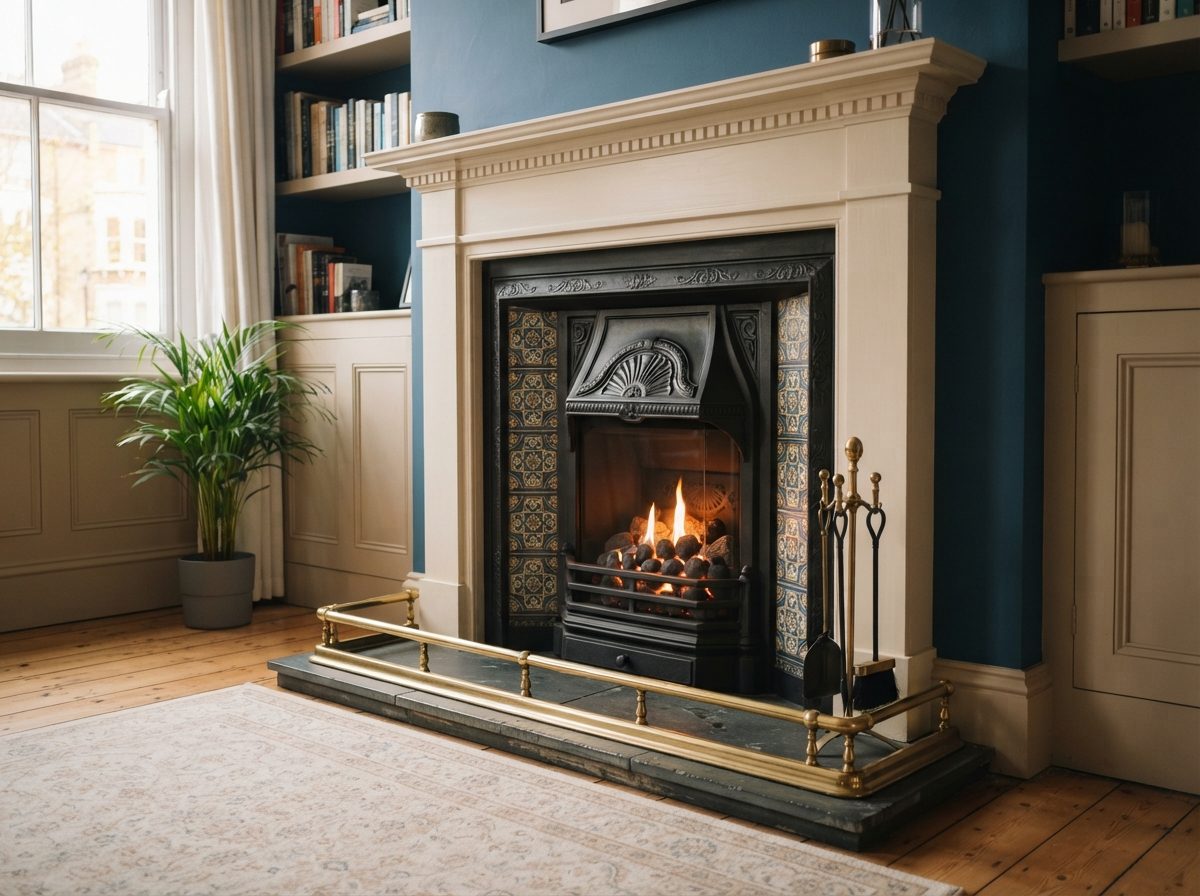
Gas fires come in many forms. There are inset fires sitting in period fireplaces, outset fires standing on a hearth, glass-fronted balanced flue fires on outside walls, power flue fires that use a fan to clear their fumes, flueless fires, decorative fuel effect fires with coals or logs, and older fires with a back boiler behind them. Each is designed and tested in its own way, so a service starts with knowing exactly what you have. Flueless and catalytic fires, for example, rely on the size of the room and a permanent air vent instead of a chimney.
What they share is a need for a clear route for fumes and a steady supply of air. An open-flued fire relies on the chimney drawing properly, and soot, fallen debris, birds' nests or a damaged liner can all stop that. When fumes cannot escape, they spill back into the room, and if the fire is not burning cleanly those fumes can contain carbon monoxide. Carbon monoxide has no smell and no colour, so you cannot rely on noticing it yourself. Much of a gas fire service is about proving that this is not happening.
On the visit, we take the fire apart as far as the manufacturer's instructions allow. We clean the burner and injector, checks the coals, logs or radiants are laid exactly as designed, and tests the pilot, the ignition and the flame supervision device that shuts off the gas if the flame goes out. We also check the burner pressure against the figures on the data plate. On open-flued fires we carry out a spillage test with the fire running, a flue flow test with a smoke pellet where the fire has been removed, and check the room has the ventilation the fire needs.
Servicing suits anyone who uses a gas fire, whether every evening or only on the coldest nights. Fires in rented homes must be checked every year as part of the landlord's gas safety check. If a fire is beyond economic repair, parts are no longer available, or it cannot be made safe, we tell you plainly and explain the options, including having the gas supply to it capped off. A fire that is serviced each year also tends to last longer, because small problems such as a sticking pilot or a dirty injector are caught before they cause bigger ones.
Signs your gas fire needs attention
The flame is the first thing to watch. Most gas fires burn with a mainly blue flame at the burner, although decorative fuel effect fires are designed to show yellow, flickering flames, which is why it helps to know your fire. A flame that has changed colour, become lazy and floppy, or lifts away from the burner is a sign that something has changed and that the fire should be checked.
Look around the fire as well as at it. Soot on the canopy, the glass, the fireplace or the wall above, and brown or black staining on the surround, all suggest the fire is not burning cleanly or fumes are not clearing. A pilot light that keeps going out, a fire that clicks but will not light, or one that shuts off after a few minutes can be a failing thermocouple or oxygen depletion sensor, but it can also mean the air supply or flue is not right.
Some of the most common problems come from changes to the room rather than the fire. New double glazing, blocked air bricks, a fitted carpet across a floor vent, or an extractor fan in a kitchen next door can all upset how an open-flued fire breathes. If you have had building work done since the fire was last checked, that alone is a reason to book.
If the carbon monoxide alarm sounds, or anyone feels unwell while the fire is on, turn it off, open windows, leave the room and call 0800 111 999. Do not use the fire again until it has been checked.
What is included
A gas fire service or repair includes:
- We check the fire, its burner and the fuel bed of coals, logs or radiants, and correct their layout where needed.
- We clean the burner, the injector and the parts around them so the fire burns as designed.
- We test the pilot, the ignition and the flame supervision or oxygen depletion device.
- We carry out flue and spillage tests to make sure fumes are carried safely away.
- We check the room has the ventilation the fire needs and that no vents have been blocked.
- We repair pilot, valve, thermocouple and ignition faults, sourcing parts where they are still made.
- We leave you a written report of what we found, the tests carried out and any advice.
What to plan before you book
Clear the hearth
Move ornaments, rugs, guards and furniture away from the fire before the visit, so we can get to it easily and lay dust sheets down. Inset fires often need to come out of the fireplace for a full service, which means a clear area in front of the hearth to work in safely.
Know what is behind it
If the fire has a back boiler behind it, tell us in your enquiry, as checking both the fire and the boiler takes longer. It also helps to know whether the back boiler still heats your radiators and water, or whether it was replaced by a newer boiler and simply left in place.
Think about the chimney
Open-flued fires need a clear, sound chimney. Sweeping is a separate job for a chimney sweep, but if the chimney has not been swept for years, or it was once used for coal or wood, mention it in your enquiry so we can advise on what the flue tests are likely to show.
Good to know
Carbon monoxide alarms
A room with a gas fire should have a carbon monoxide alarm. In rented homes in England it has been a legal requirement since October 2022 in any room with a fixed combustion appliance, apart from gas cookers. Fit it as the maker's instructions say, usually on the ceiling or high on a wall, a short distance from the fire.
Do not block the vents
Air vents in the room, the wall or the fireplace are there to give the fire the air it needs to burn safely. Blocking them to stop draughts can make the fire produce carbon monoxide. If a vent is causing a real problem, ask about it, as there is sometimes a safe way to reposition it.
Decorative fires need care too
A fire used mostly for looks still burns gas and still needs a regular check. Decorative fuel effect fires burn with a more open flame than heating fires, and the coals or logs must sit exactly as designed. Moving them, adding extra pieces or cleaning them with the wrong products can affect how the fire burns.
How it works
- 1
Tell us about the fire
Let us know the type of fire, whether it has a back boiler, roughly how old it is, and what it is doing or not doing. Send us a message through the enquiry form, and add a photo if you can.
- 2
Arrange a visit
We agree a time that suits you and remind you to turn the fire off a few hours beforehand so the burner and glass are cool enough to work on.
- 3
Service and test
We take the fire apart as far as needed, clean and check each part, then test the flue, spillage and ventilation with the fire lit and running.
- 4
What happens next
We explain the results in plain terms, carry out any repair you agree to, and leave you a written record of the work and the tests we carried out.
Gas fires in Hackney, Islington and Shoreditch
Hackney's Victorian terraces still have plenty of original fireplaces, many fitted with inset gas fires in the old chimney openings, and some estate flats have balanced flue or back boiler fires that date back decades. In Islington, Georgian and Victorian houses often have a fireplace in almost every room, and in conservation areas chimneys and fireplaces are part of the building's character, so period-style gas fires are a common sight.
In Shoreditch, gas fires are more likely to be glass-fronted fires in warehouse conversions and new-build flats, often balanced flue or power flue models, along with the occasional feature fire in a bar or restaurant. Each type is checked in its own way, and chimneys in older houses get the closest attention, because a shared stack or a damaged liner is not always obvious from inside the room.
Questions customers ask
How often should a gas fire be serviced?
Once a year is the usual advice, and manufacturers usually ask for a yearly service. In rented homes the fire must be safety checked every year as part of the landlord's gas safety check, with the record kept for two years.
How is the price worked out?
It depends on the type of fire and what it needs. Fires with a back boiler, or fires that need to come out of the fireplace, take longer, so tell us about yours in your enquiry and we can explain the cost before the visit.
My pilot light keeps going out. Is it safe?
Stop using the fire and have it checked. A pilot that keeps going out can mean a worn thermocouple or sensor, but it can also mean a problem with the flue or air supply, which is why it should not be ignored.
Can you work on a fire with a back boiler?
Yes. Tell us in your enquiry so we can allow time to check both the fire and the boiler behind it. Back boilers are old technology now, so we also give you an honest view of how much life yours has left.
What if my fire cannot be repaired?
We tell you plainly and explain the options, which may be a replacement fire or capping off the gas supply. If the fire is unsafe, it is turned off and labelled with your permission, and we explain exactly why.
Do I need a carbon monoxide alarm?
It is strongly advised in any room with a gas fire. In rented homes in England it is required by law in any room with a fixed combustion appliance other than a gas cooker. Test it regularly and replace it by its end date.
Can you sweep my chimney?
Chimney sweeping is a separate job for a chimney sweep. Our part is testing whether the flue is drawing and clearing fumes properly. If it is not, we tell you, so you can book a sweep before the fire is used again.
Have your gas fire checked
Tell us the type of fire, and whether it has a back boiler, in your enquiry, and we will arrange a time to look at it.